

Talent gets you into the arena. A well-designed sponsorship proposal gets you funded to stay there.
At psyborg® we’ve designed sponsorship proposals for world champions, Olympians, elite watermen, NRL players, and foundation-builders. Every one of them had the results. What they didn’t always have was a document that translated those results into a clear, commercial offer a brand could say yes to.
This article is for the athletes who’ve done the work in the ring, on the water, or on the field … and are ready to stop chasing sponsors and start attracting them.
What a Sponsorship Proposal Actually Is
A sponsorship proposal is not a CV. It’s not a highlight reel. It’s a commercial pitch document that sells an investment opportunity to a business.
Brands don’t sponsor athletes out of charity. They sponsor because they see a return … exposure, alignment, access, storytelling, or all of the above. Your proposal’s job is to make that return obvious and quantifiable.
Part mind. Part machine. The best sponsorship proposals balance emotional storytelling with cold, commercial logic.
Why It Matters More Than You Think
Elite sport is competitive. Elite sponsorship is more competitive. Every athlete in your weight class, division, or sport is chasing the same pool of corporate dollars, and most of them are sending a PDF stitched together the night before a meeting.
A considered proposal does three things at once:
- Positions you as a professional, not a hopeful. Brands invest in athletes who operate like businesses.
- Removes friction from the decision. Clear tiers, pricing, and deliverables let a sponsor say yes without a committee meeting.
- Protects your brand equity. A documented offer means you stop undervaluing yourself in conversations.
It’s the difference between “can you help me out?” and “here’s the opportunity.”
The Anatomy of a High-Performing Sponsorship Proposal
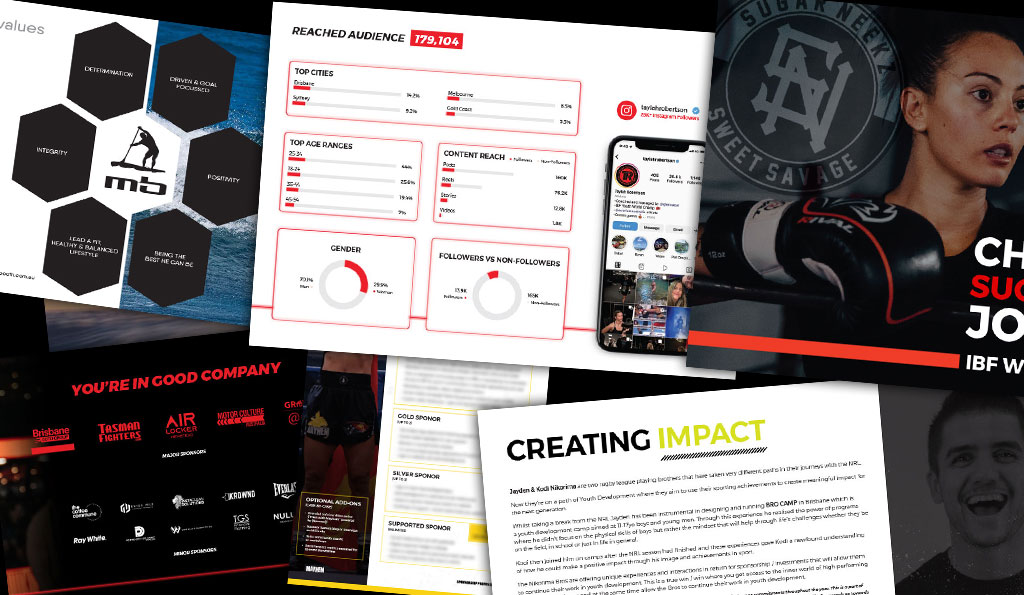
Across the proposals we’ve built … for Alyssa Azar, Cherneka ‘Sugar Neekz’ Johnson, Michael Booth, Mili ‘Mayhem’ Saul, the Nikorima Bros, and Taylah Robertson … the same structural components show up again and again. Here’s what goes into one that actually converts.
1. A Strong Cover and Identity
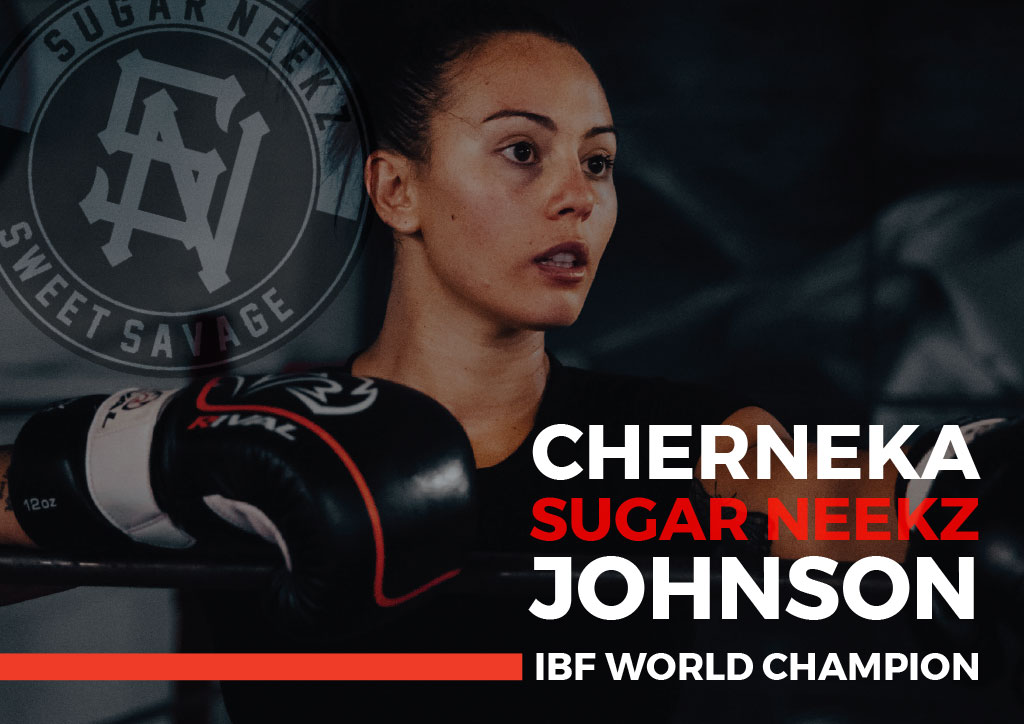
Your cover does the work of a handshake. A striking portrait, a clear logo or monogram, and a single-line positioning statement. “The Sweet Savage.” “Elite Waterman | World Champion.” “Together with Purpose.” One look, one feeling, one clear athlete.
2. The Personal Story
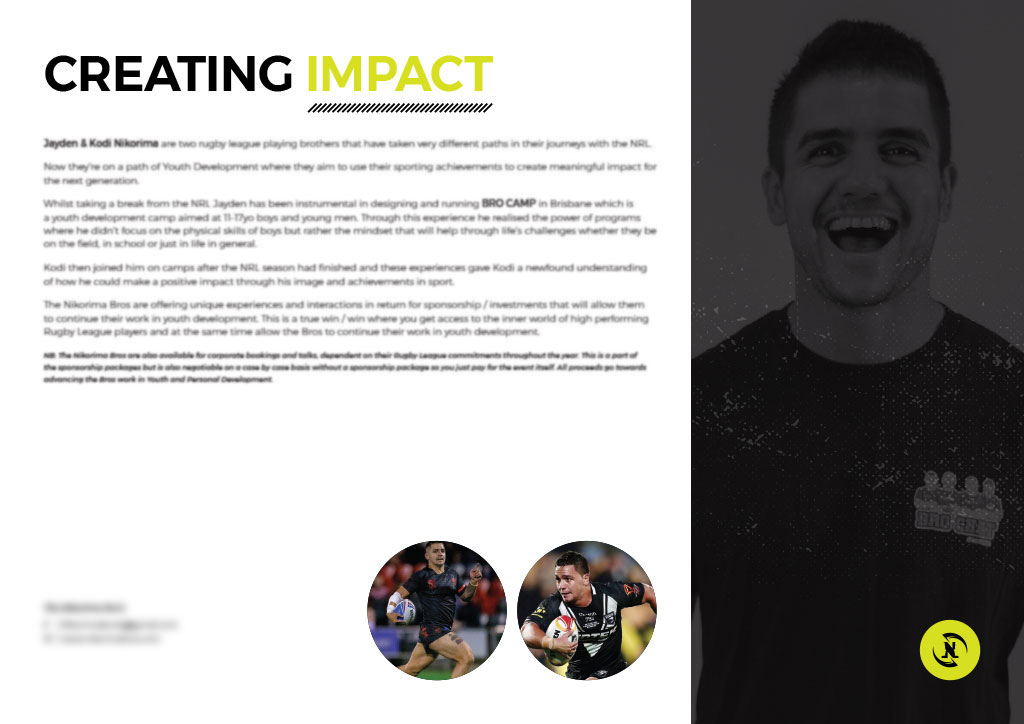
Facts inform. Stories sell. Brands align with people, not statistics. Every proposal needs a chapter on who the athlete is, where they came from, and what they stand for. Mili Saul’s story ties her boxing to Milne Bay heritage and youth advocacy. Alyssa Azar’s ties her adventures to a foundation helping vulnerable youth. The narrative gives the sponsor something to stand behind.
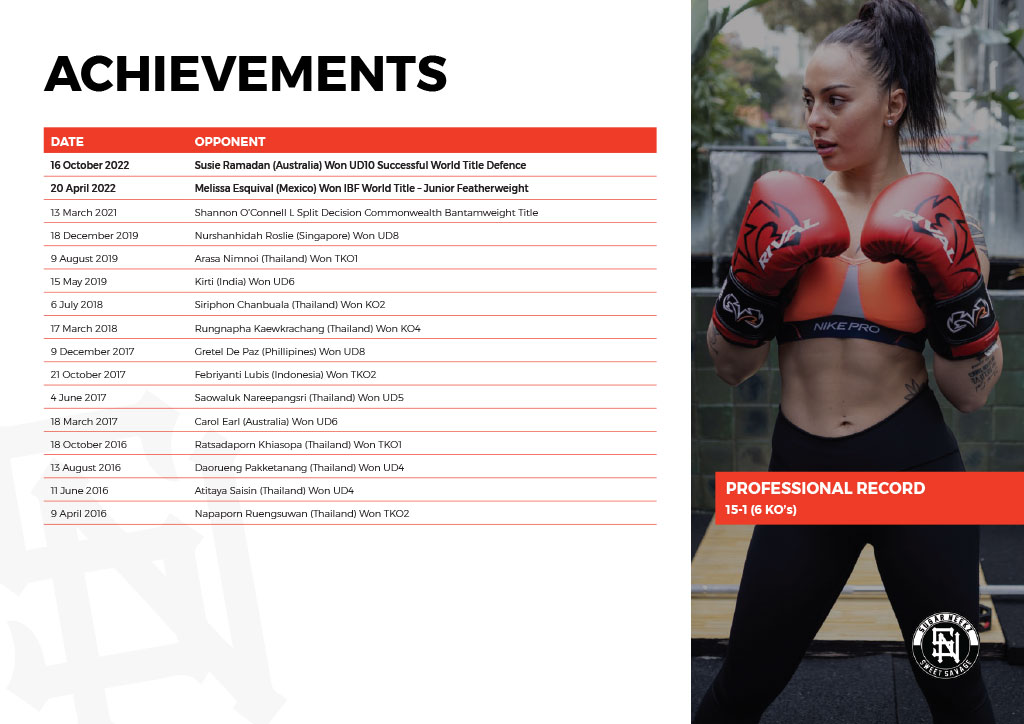
3. Proven Achievements and Credentials
This is your evidence locker. Titles, rankings, fight records, podium finishes, representative honours, media appearances. Present it cleanly … a professional record table, a dated list of results, logos of the outlets that have covered you. Credibility compounds.
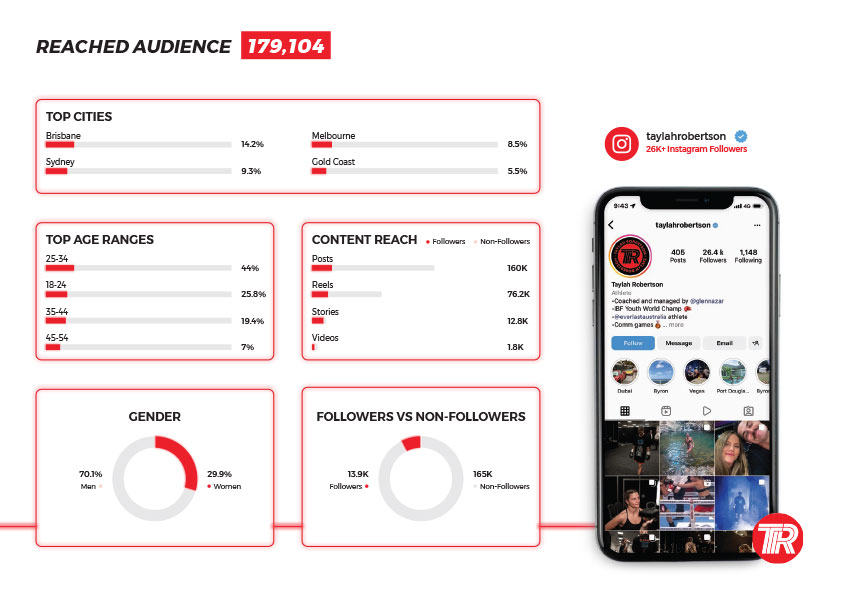
4. Audience and Reach
This is where most athletes undersell themselves. Your social following, demographic breakdown, top cities, age ranges, gender split, reach vs. follower count … all of it is commercial data. Sponsors want to know exactly who they’re buying access to. A clean audience snapshot turns your Instagram into a media asset.
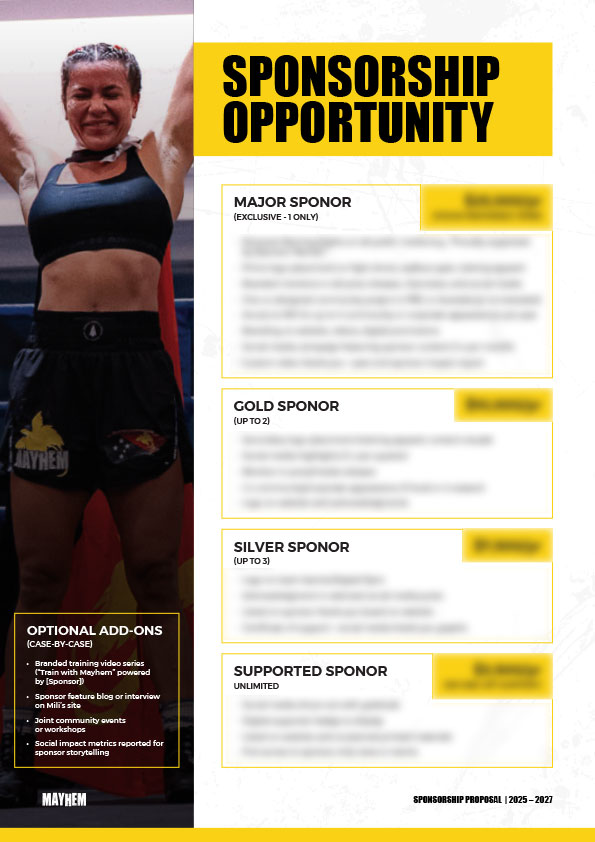
5. Clear Investment Tiers
Tiered packaging is where proposals earn their keep. It gives sponsors options at different price points and makes the buying decision easy.
A typical structure looks like this:
- Major / Naming Rights Sponsor … top tier, exclusive, premium placement on fight gear or equipment, naming rights, full marketing access.
- Inner Circle / Gold … capped number of partners, strong exposure, appearances, logo placement, content.
- Silver / Supporter … smaller commitment, still visible, listed on website and socials.
- Fight-by-Fight / Event-Based … lower entry point for brands testing the waters.
Every tier needs a price, a position cap, and a clear list of deliverables. Ambiguity kills deals.
6. What the Sponsor Gets
Spell it out. Don’t make the brand do the maths. List the deliverables plainly … logo on fight shorts, social media posts per month, appearances per year, content rights, event invitations, speaking engagements, product feature access.
7. What the Sponsorship Funds
Sponsors want to know where their money goes. Training camps. International travel. Coaching. Media production. Community programs. This transparency builds trust and reinforces that the investment is going into performance, not lifestyle.
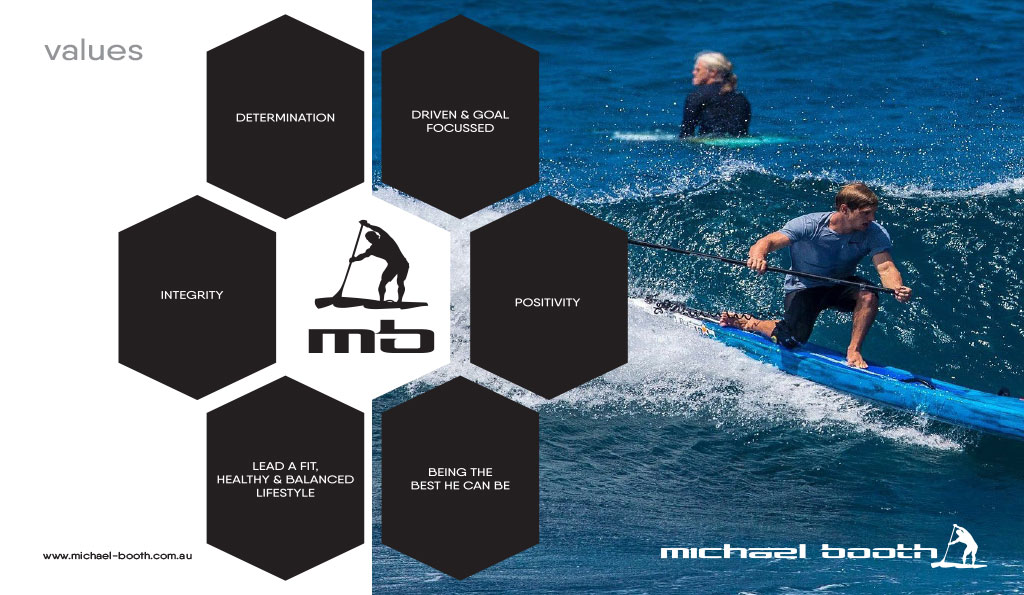
8. Values Alignment
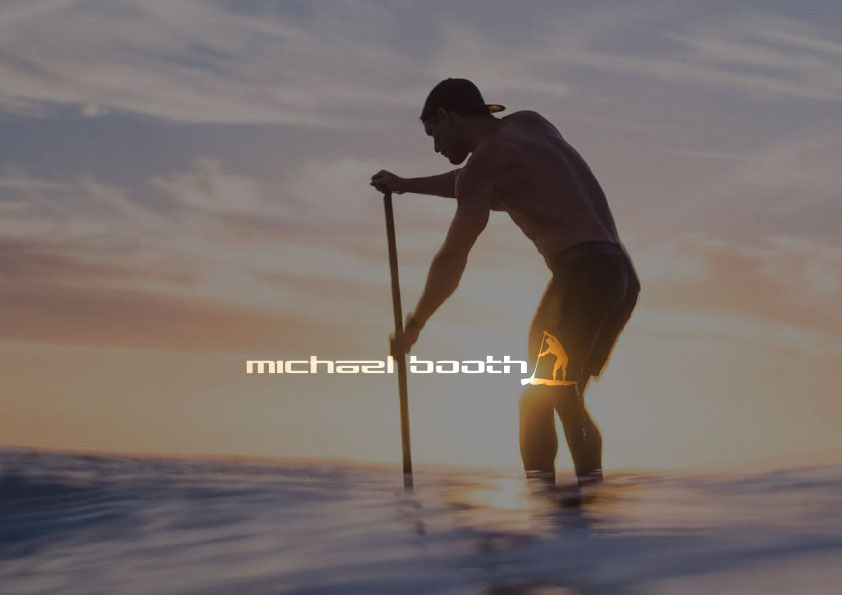
The best partnerships are built on shared values. Michael Booth’s proposal leans on determination, integrity, positivity, and healthy living. Taylah Robertson’s leans on authenticity, hard work, and role-modelling for young women. Name your values. It filters out the wrong sponsors and magnetises the right ones.
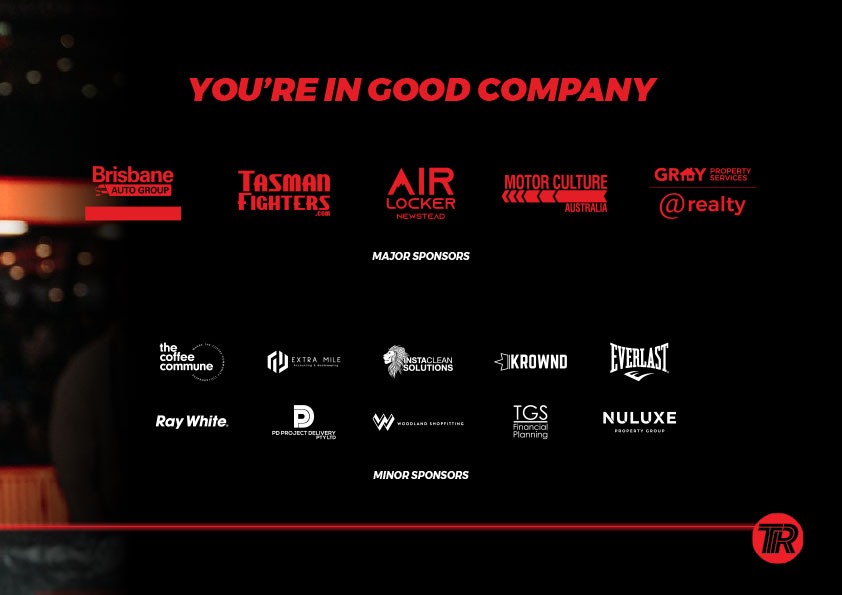
9. Existing Sponsors and Social Proof
A logo wall of current and past sponsors tells a new brand “others have already said yes.” Social proof lowers perceived risk … one of the single biggest barriers to a sponsorship sign-off.
10. A Clear Call to Action
End with a direct next step. A name, a number, an email, a signature. Make it easy to reply.
The psyborg® Approach
We design sponsorship proposals the same way we design brands … with intent. Every page earns its place. Every tier is structured to convert. Every visual reinforces the athlete’s positioning, and every deliverable is written in language a sponsor’s marketing manager can take straight to their CFO.
Creativity, fuelled by logic. That’s the psyborg® way.
If You’re an Elite Athlete Reading This
You’ve already done the hardest part. You’ve trained, competed, and earned your credibility. Don’t let a thrown-together PDF undermine the career you’ve built. A proposal designed with strategy and craft is an asset you’ll use for years … across every negotiation, every renewal, every new title you chase.
Design with intent. Fund the dream.
If you’d like to discuss building a sponsorship proposal for your personal brand, get in touch.
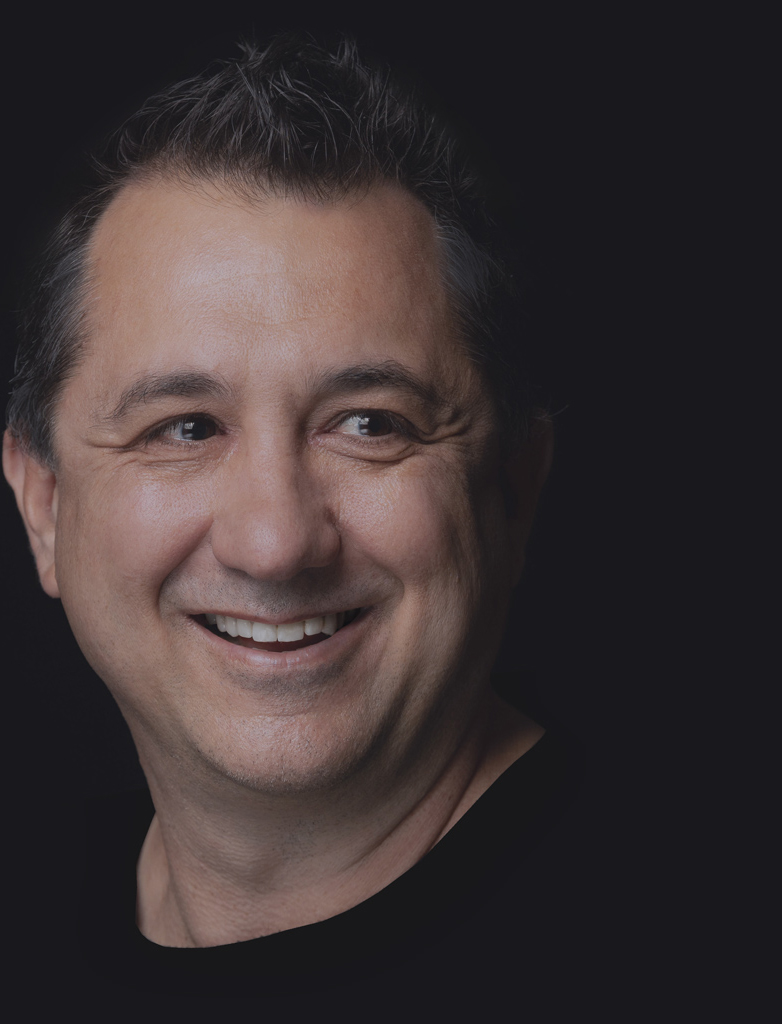
Daniel Borg
Creative Director
psyborg® was founded by Daniel Borg, an Honours Graduate in Design from the University of Newcastle, NSW, Australia. Daniel also has an Associate Diploma in Industrial Engineering and has experience from within the Engineering & Advertising Industries.
Daniel has completed over 2800 design projects consisting of branding, content marketing, digital marketing, illustration, web design, and printed projects since psyborg® was first founded. psyborg® is located in Lake Macquarie, Newcastle but services business Nation wide.
I really do enjoy getting feedback so please let me know your thoughts on this or any of my articles in the comments field or on social media below.